Toddler Balance Bike for 2 Year Old: How to Choose the Right First Bike

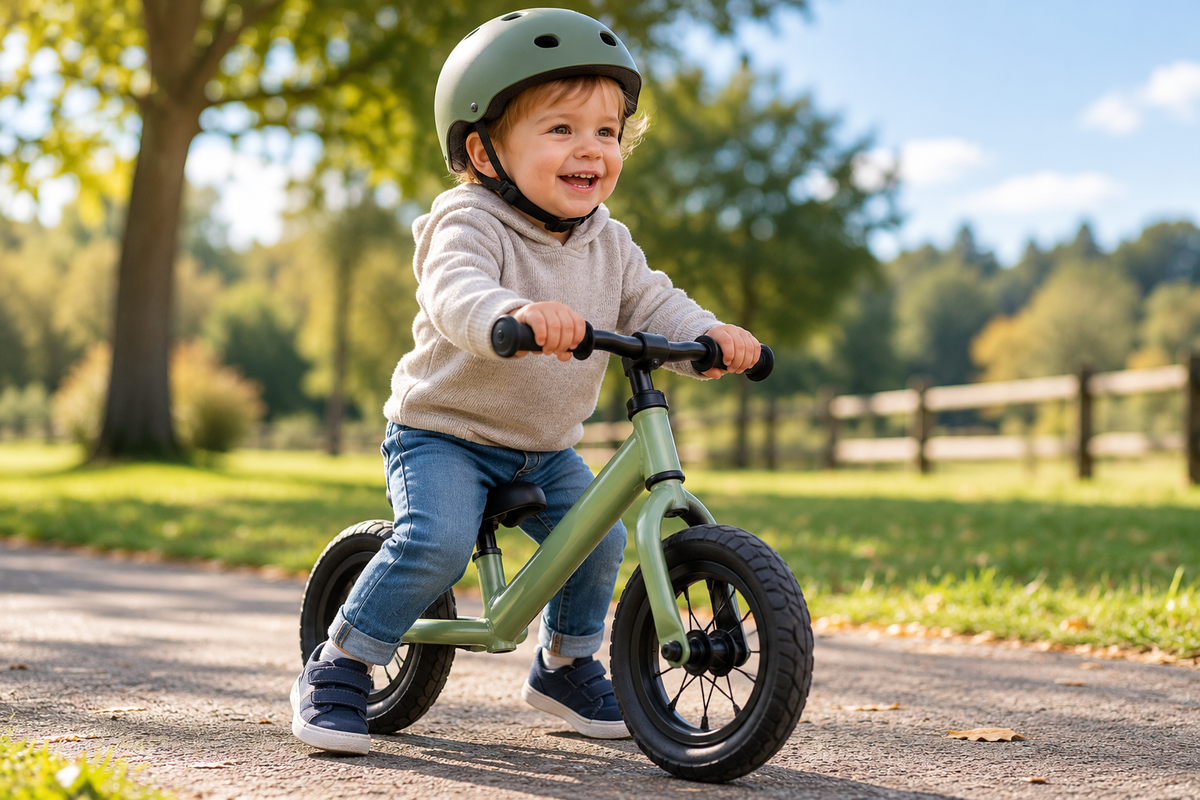
Two is an interesting age for buying a first bike.
Most toddlers are becoming increasingly confident on their feet, want to copy older children and have discovered that getting everywhere as quickly as possible is far more exciting than walking sensibly next to their parents.
That is exactly where a balance bike can come in.
If you are looking for a toddler balance bike for a 2 year old, the most important things are not flashy features or the biggest wheels. You want something lightweight, low enough for your child to confidently reach the ground and simple enough that they can concentrate on balancing and steering.
A well-sized balance bike can be a brilliant introduction to cycling and may eventually make the move to a pedal bike feel much more natural.
Here is what UK parents should look for.
What is a balance bike?
A balance bike looks similar to a small children's bicycle but has no pedals.
Instead, the child sits on the saddle and uses their feet to push themselves forwards.
Initially, most two-year-olds will simply walk while sitting on the bike.
As their confidence develops, they begin taking longer strides, lifting their feet briefly and eventually gliding.
That is the important part.
Rather than relying on stabilisers to keep the bike upright, children gradually learn how to balance the bike themselves.
They also practise:
- Steering
- Turning
- Stopping
- Judging speed
- Coordinating their arms and legs
- Shifting their body weight
All of this happens before pedals are introduced.
Is 2 years old too young for a balance bike?
For many children, two is an excellent age to start.
The exact age matters less than physical development.
A child should already be a confident walker and need to be tall enough to sit comfortably on the saddle while putting both feet on the ground.
Some children are ready before their second birthday.
Others may not enjoy a balance bike until they are closer to three.
There is no benefit in forcing it.
At this age, the aim should be to make riding feel like play rather than something they need to master by a particular date.
Why balance bikes work well for toddlers
Traditional children's bikes often introduce several new skills at once.
A child has to:
- Pedal
- Balance
- Steer
- Stop
- Understand braking
That can be a lot to learn simultaneously.
A balance bike removes the pedalling part completely.
The toddler can concentrate on moving the bike and staying upright while always having their feet close to the floor.
Once they eventually move to pedals, balancing should already feel familiar.
This is one reason many parents now choose a balance bike before moving onto a conventional children's bicycle.
How to choose a toddler balance bike for a 2 year old
There are dozens of designs available, but you can narrow the options down fairly quickly.
1. Check the seat height
This is probably the most important measurement.
When your child sits on the saddle, both feet should comfortably reach the ground.
Their knees should have a slight bend rather than their legs being completely straight.
That allows them to push themselves forwards and stop confidently using their feet.
If your toddler is stretching to touch the floor with their toes, the bike is too large.
Do not buy a bike that is obviously too big simply because they will "grow into it".
A balance bike works best when the child feels completely in control from the beginning.
2. Keep the bike lightweight
Two-year-olds are small.
Their bike should be proportionately light too.
A heavy bike is harder to steer, pick up and move around, especially when a toddler is only beginning to understand how it works.
Weight also becomes very relevant for parents.
There is a good chance that at some point on every outing your toddler will decide they have finished riding and you will end up carrying the bike home.
A lightweight frame makes life easier for everyone.
3. Look for an adjustable saddle
Toddlers grow quickly.
An adjustable seat gives you more chance of getting several years of use from the same bike.
Start with the saddle low enough that your child feels secure.
As they become taller and more confident, you can gradually raise it.
Ideally, adjustment should be relatively straightforward rather than requiring half the contents of the garage toolbox every few weeks.
What wheel size is best for a 2 year old?
Small balance bikes commonly use wheels around 10 to 12 inches.
For many two-year-olds, this provides the right combination of manageable proportions and enough room to grow.
But do not choose purely based on wheel diameter.
Two bikes with identical wheel sizes can have completely different saddle heights and frame dimensions.
Your child's inside leg measurement is usually more useful than age alone.
If possible, compare the manufacturer's minimum saddle height with your toddler's inside leg.
Foam tyres or air tyres?
You will commonly find two types.
Foam or solid tyres
These tend to be:
- Lightweight
- Puncture-proof
- Low maintenance
They are a practical option if most riding will happen on smooth pavements, patios or park paths.
There is also no need to worry about checking tyre pressure.
Air-filled tyres
Pneumatic tyres generally provide more cushioning and grip.
They can be useful if your toddler will regularly ride on:
- Rough paths
- Grass
- Gravel
- Uneven surfaces
The trade-off is extra weight and the possibility of punctures.
For an average two-year-old mainly learning around the garden or local park, either can work perfectly well.
Should a balance bike have brakes?
At two years old, many children initially use their feet to slow and stop.
A hand brake therefore is not essential on every first balance bike.
Some models include one, which can be useful as the child becomes faster and more confident.
However, the brake lever needs to be small and light enough for little hands to operate comfortably.
There is not much point adding a brake that requires adult-sized hand strength.
For a very young beginner, fit and weight should normally come before sophisticated braking features.
Where should you buy a balance bike?
There are plenty of children's cycling and ride-on specialists in the UK.
If you want to compare toddler bikes alongside other children's ride-on options, Electric Ride On Cars is one retailer worth exploring.
Whichever retailer you use, check the measurements rather than choosing exclusively by the age printed in the product description.
Two children of exactly the same age can be very different heights.
Balance bike vs stabilisers
This is one of the most common questions parents have.
Stabilisers keep a pedal bike upright by adding extra wheels.
That allows a child to learn the pedalling motion without needing to fully balance the bicycle.
A balance bike does the opposite.
It removes the pedals and lets the child focus entirely on balance first.
Both approaches can work, but the experience is different.
A toddler who becomes comfortable gliding on two wheels has already learned one of the most difficult parts of riding a bicycle before pedals are introduced.
Balance bike vs trike for a 2 year old
A tricycle offers more stability.
That may make it attractive for a younger toddler who is not ready to balance on two wheels.
The three-wheel design means the child does not need to continually correct the bike to keep it upright.
A balance bike requires more active balancing.
For confident walkers who enjoy being physically active, that additional challenge is often part of the appeal.
You do not necessarily have to choose one forever.
Some children use push-along toys and trikes before gradually progressing onto a balance bike.
Where can a 2 year old practise?
Start somewhere flat, open and away from traffic.
Good options include:
- A private garden
- Patio
- Quiet park path
- Flat playground
- Traffic-free paved area
At the beginning, you do not need hills.
Your toddler is learning how the bike responds to their movements, so a smooth flat area makes everything easier.
Avoid busy pavements where pedestrians, dogs and other cyclists make the experience unnecessarily complicated.
Does a toddler need a helmet on a balance bike?
A properly fitted children's cycle helmet is a sensible choice when a toddler is using a balance bike.
Make sure it:
- Fits securely
- Does not move around excessively
- Sits correctly rather than tipping backwards
- Has straps adjusted to the child
A helmet that is obviously too large because the child will eventually grow into it defeats the purpose.
Comfort matters too.
If it is uncomfortable, convincing a two-year-old to wear it repeatedly may become its own endurance sport.
What should a toddler wear?
Normal comfortable clothing is generally enough.
Avoid anything that could easily become caught around the wheels.
Closed shoes with reasonable grip are particularly useful because toddlers initially use their feet for both propulsion and braking.
They may wear through shoes slightly faster once they discover they can drag their feet to stop.
That is fairly normal.
How do you teach a 2 year old to use a balance bike?
You largely don't.
That is one of the nicest things about them.
Set the saddle correctly, show your child how to sit on it and let them experiment.
Initially, they may simply stand over the bike and walk.
That is fine.
Eventually they may sit down.
Then they start pushing more quickly.
After that, you begin noticing tiny moments when both feet come off the ground.
Those moments gradually become longer glides.
Avoid constantly holding the bike upright from behind.
The purpose is for your child to discover the balancing point themselves.
Stay nearby for reassurance, but allow them to control the bike.
How long does it take to learn?
There is no meaningful average that parents need to worry about.
One child might start gliding within a few outings.
Another may happily walk around with the bike for several months before lifting their feet.
Both are completely normal.
At two years old, enjoyment is much more important than progression.
Five happy minutes on the bike is better than turning every trip to the park into an hour-long cycling lesson.
What features actually matter?
When shopping for a first balance bike, prioritise:
Low minimum saddle height
Your toddler needs to reach the ground confidently.
Low weight
Lighter generally means easier handling.
Adjustable seat
Useful as the child grows.
Comfortable grips
Small hands need appropriately sized handlebars.
Suitable tyres
Choose according to where the bike will be ridden.
Simple construction
A first bike does not need endless features.
Colour and character designs can obviously help if they make your toddler excited about riding, but they should come after fit.
When should you move to a pedal bike?
There is no rush.
A child may continue happily using a balance bike until four or even older depending on the model and their development.
Consider moving towards pedals once they can confidently:
- Glide with both feet raised
- Steer around obstacles
- Control their speed
- Stop safely
- Balance through turns
At that point, the transition can sometimes happen surprisingly quickly because the balancing skill is already established.
The bottom line
If you are choosing a toddler balance bike for a 2 year old, start with size rather than design.
Your child should comfortably reach the ground with both feet, the bike should be light enough to handle easily and the saddle should ideally have enough adjustment to accommodate some growth.
Do not worry if your toddler does little more than walk around with the bike initially.
That is part of the learning process.
With time, those small steps tend to become faster pushes, followed by short glides and eventually confident balancing.
The best first bike is not necessarily the most expensive or feature-packed one.
It is the bike that fits properly, feels manageable and makes your two-year-old want to get back on it tomorrow.