Stir Together Ingredients Until They Are Combined: What Does It Mean?

You're halfway through a recipe when you come across an instruction that sounds almost too obvious:
"Stir together ingredients until they are combined."
It seems straightforward. But should you use a whisk or spoon? How long should you stir? And does "combined" mean completely smooth?
These details can make a surprisingly big difference, especially when baking cakes, muffins, pancakes, and cookies.
The good news is that the instruction is easier to follow once you understand what the recipe is trying to achieve.
What Does "Stir Together Ingredients Until They Are Combined" Mean?
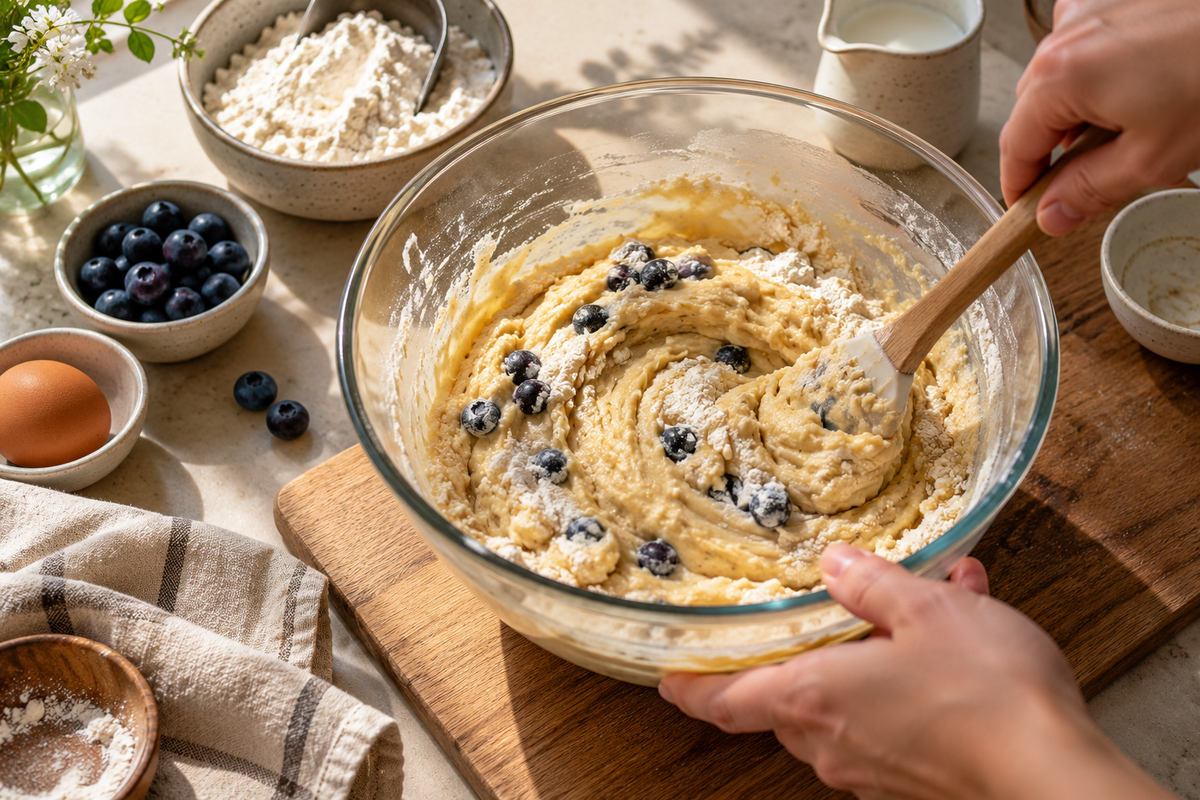
When a recipe tells you to stir together ingredients until they are combined, it means mixing them until they're evenly distributed, without continuing unnecessarily.
For example, if you're combining flour, sugar, milk, and eggs, the aim is to produce a reasonably uniform mixture.
You shouldn't see large pockets of dry flour or obvious areas where the ingredients remain separated.
However, the mixture doesn't always need to become completely smooth.
Some batters, particularly muffins and pancakes, should still have a few small lumps.
The key is to stop stirring once the ingredients are sufficiently incorporated for that particular recipe.
This prevents unnecessary mixing and helps achieve the intended texture.
Stir, Beat, Blend, or Fold: What's the Difference?
Recipes use several mixing instructions, and they don't all mean the same thing.
| Instruction | What It Means | Common Uses |
|---|---|---|
| Stir | Mix ingredients using controlled circular movements | Sauces, simple batters, dry mixtures |
| Beat | Mix vigorously, often incorporating air | Eggs, butter and sugar |
| Blend | Combine until evenly incorporated or smooth, as directed | Smoothies, soups, dressings |
| Fold | Gently combine using lifting and turning movements | Whipped cream, egg whites, delicate batters |
| Whisk | Mix with a whisk to combine or aerate | Eggs, sauces, dressings |
The distinction matters because different recipes require different textures.
A cake batter that needs significant aeration might require beating.
A delicate muffin batter, meanwhile, usually benefits from gentler mixing.
Simply stirring until combined isn't intended to add substantial amounts of air.
How to Stir Ingredients Together Properly
Step 1: Choose the Right Mixing Bowl
Start with a bowl large enough to comfortably hold all your ingredients.
If the bowl is too small, mixing becomes awkward and ingredients may spill over the sides.
A medium or large bowl usually works well for everyday baking.
Step 2: Use an Appropriate Tool
A wooden spoon, silicone spatula, or whisk can work, depending on the mixture.
For thick cookie dough, a sturdy spoon or spatula is often easier to control.
For thin sauces and dressings, a whisk can help distribute ingredients efficiently.
Unless the recipe specifically calls for an electric mixer, you usually don't need one.
Step 3: Mix With Controlled Movements
Move the spoon through the ingredients, scraping along the bottom and sides of the bowl.
Turn the mixture over periodically to ensure ingredients aren't collecting beneath the surface.
For batters containing flour, avoid aggressive beating unless instructed otherwise.
Step 4: Check for Unmixed Ingredients
Look for areas of dry flour, separate streaks of liquid, or unmixed ingredients.
Continue stirring gently until these are incorporated.
The exact stopping point depends on what you're making.
Step 5: Stop at the Right Moment
Once the ingredients are evenly distributed, stop.
Additional mixing isn't always beneficial.
In some recipes, it can make the finished texture tougher or denser than intended.
Why Overmixing Can Ruin a Recipe
Overmixing is particularly important when working with wheat flour.
Flour contains proteins that can form gluten when combined with water and worked through mixing.
Gluten provides structure, which is desirable in bread.
However, too much gluten development can make tender baked goods less delicate.
For example, excessively mixing muffin batter can produce a tougher texture or noticeable tunnels inside the muffins.
Pancakes may also turn out chewier than expected.
This doesn't mean gluten development is automatically bad.
Bread and many other baked goods depend on it.
The important thing is following the mixing method appropriate to the recipe.
Should Batter Be Completely Smooth?
Not always.
This is one of the most common sources of confusion for beginner bakers.
Pancake batter: A few small lumps are usually acceptable.
Muffin batter: It's often better to stop once the dry ingredients are moistened.
Cake batter: The desired consistency depends on the recipe and mixing method.
Cookie dough: Ingredients should generally be evenly distributed, without large pockets of dry flour.
Sauces: Many sauces benefit from a smooth texture, although this depends on the ingredients.
The phrase "until combined" doesn't automatically mean "until perfectly smooth."
Pay attention to any additional texture instructions.
Examples of Mixing Until Combined
Pancake Batter
Imagine a recipe asking you to mix flour, milk, eggs, and baking powder.
Stir until the flour has been incorporated.
Small lumps are generally fine.
Continuing to whisk aggressively in pursuit of a perfectly smooth texture may make the pancakes less tender.
Chocolate Chip Cookies
Cookie dough often involves combining flour with creamed butter, sugar, and eggs.
Once the flour is evenly incorporated, unnecessary additional mixing isn't helpful.
Chocolate chips can then be folded or stirred in until distributed.
Salad Dressing
A simple dressing made with olive oil, vinegar, mustard, and seasonings needs a different approach.
Here, the objective is to distribute the ingredients and create a temporary or more stable emulsion.
Whisking or shaking may be appropriate.
The mixture may separate again during storage, depending on its ingredients.
Muffin Batter
Muffins are particularly sensitive to excessive mixing.
When combining wet and dry ingredients, stir carefully and stop once the flour is moistened.
A few small lumps are preferable to a batter that has been aggressively beaten.
Common Mixing Mistakes
Using the wrong tool: A whisk may struggle with thick dough, while a large spoon may be inefficient for emulsifying a thin dressing.
Ignoring the bottom of the bowl: Dry ingredients can collect underneath an apparently mixed batter.
Mixing too aggressively: Some recipes require gentle incorporation rather than vigorous beating.
Stopping too early: Large pockets of dry flour can create uneven results.
Continuing too long: Extra stirring may alter the texture of certain flour-based batters.
A good approach is to mix deliberately, check the consistency, and stop when the recipe's instructions have been satisfied.
Frequently Asked Questions
Does "Stir Until Combined" Mean Use a Mixer?
Not necessarily. A spoon or spatula is often sufficient. Use an electric mixer when the recipe specifically calls for one or when the mixture requires that method.
How Long Should You Stir Ingredients?
There's no universal time. It depends on the ingredients, quantity, and consistency. The visual result matters more than stirring for an arbitrary number of seconds.
What Does "Just Combined" Mean in Baking?
"Just combined" means the ingredients have been incorporated enough to eliminate substantial unmixed areas, but the mixture hasn't been worked beyond that point.
Is Stirring the Same as Whisking?
Not exactly. Stirring combines ingredients, while whisking can also incorporate air or help form an emulsion. A whisk can be used gently to stir, but the techniques aren't always interchangeable.
Why Does My Batter Have Lumps?
Some batters naturally contain small lumps after gentle mixing. These aren't always a problem. Large pockets of dry ingredients, however, usually need further incorporation.
Final Thoughts
When a recipe says "stir together ingredients until they are combined," don't overthink it.
Use a suitable utensil, mix until the ingredients are evenly distributed, and stop when you reach the desired consistency.
For muffins and pancakes, a few small lumps may be perfectly normal.
For sauces and dressings, a more uniform mixture may be necessary.
Understanding this simple instruction can help you avoid overmixing and become a more confident home cook.