Shoji White vs Swiss Coffee: Which Paint Color Is Better?

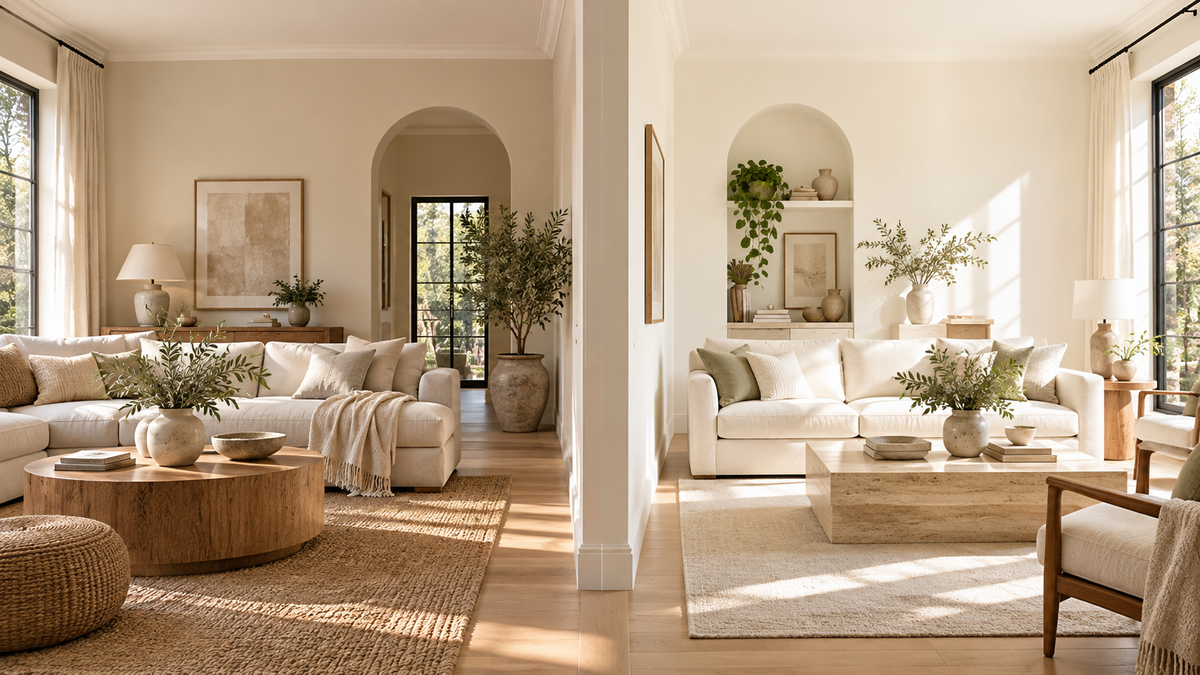
Choosing the perfect white paint sounds simple until you discover just how many shades of white exist. Some look creamy, others appear gray, and a few can change dramatically depending on the lighting.
Two popular choices are Sherwin-Williams Shoji White SW 7042 and Benjamin Moore Swiss Coffee OC-45.
Both create warm, inviting interiors, but they're not interchangeable. Shoji White is a deeper, more muted off-white with greige influences, while Swiss Coffee is a brighter, softer white with a creamy appearance.
So which one should you choose?
In this guide, we'll compare Shoji White vs Swiss Coffee, including undertones, brightness, natural lighting, kitchen cabinets, trim colors and the rooms where each shade works best.
Shoji White vs Swiss Coffee: The Quick Answer
If you're deciding between these two shades, here's the main difference:
Shoji White is better for a warmer, slightly moodier neutral interior. Swiss Coffee is better for a brighter, classic off-white appearance.
Both work beautifully with natural materials and traditional or contemporary furniture.
However, your room's lighting and existing finishes will influence how each paint appears.
Key Differences
Sherwin-Williams Shoji White SW 7042
- Light Reflectance Value: approximately 74
- Color family: Warm off-white
- Undertones: Beige and subtle greige influences
- Appearance: Muted, earthy and softly creamy
- Ideal for: Living rooms, bedrooms and warm neutral interiors
Benjamin Moore Swiss Coffee OC-45
- Light Reflectance Value: 81.91
- Color family: Warm off-white
- Undertones: Creamy, with a gentle yellow warmth
- Appearance: Brighter and more traditional
- Ideal for: Kitchens, hallways and rooms needing a lighter appearance
Although both belong to the warm-white family, Swiss Coffee reflects noticeably more light.
What Color Is Sherwin-Williams Shoji White?
Shoji White SW 7042 is a warm off-white with beige and greige characteristics.
Sherwin-Williams describes it as a creamy white that borders on greige, which explains why it often looks more substantial than a conventional white wall.
In a bright room, Shoji White may appear like a soft, warm neutral.
In spaces with limited daylight, its beige-gray influence can become more noticeable.
This makes it particularly interesting for homeowners who want lighter walls without the starkness of brilliant white.
Shoji White works especially well with natural oak furniture, linen upholstery, warm wood flooring and subtle earthy accents.
It's an appealing choice for Scandinavian, Japandi, transitional and traditional interiors.
What Color Is Benjamin Moore Swiss Coffee?
Swiss Coffee OC-45 is one of Benjamin Moore's well-known warm off-white paint colors.
It has a brighter appearance than Shoji White, making it suitable for homeowners who want a creamy white rather than a noticeably beige wall.
Its warmth helps prevent spaces from feeling overly clinical.
Swiss Coffee is frequently considered for kitchens, living rooms, bedrooms and hallways where a soft, inviting atmosphere is desirable.
Because it's lighter than Shoji White, it can provide a more traditionally white appearance while maintaining some warmth.
However, in rooms with strong warm lighting, its creaminess may become more apparent.
Comparing Their Light Reflectance Values
One of the easiest ways to understand the difference between these colors is through LRV.
LRV stands for Light Reflectance Value.
It measures how much visible light a paint color reflects on a scale from 0 to 100.
Lower numbers represent darker colors, while higher numbers represent lighter shades.
Shoji White has an LRV of approximately 74.
Swiss Coffee has an LRV of 81.91.
That difference is significant enough to influence the visual atmosphere of a room.
Swiss Coffee generally produces a brighter, airier appearance.
Shoji White offers more depth and can feel warmer and more grounded.
However, LRV doesn't tell you everything about a paint color.
Undertones, window placement, flooring and artificial lighting can all affect the finished appearance.
Which Paint Is Better for North-Facing Rooms?
North-facing rooms often receive cooler, less direct sunlight.
This can make certain paint colors appear grayer or less inviting.
Both Shoji White and Swiss Coffee contain warmth that may help balance cooler lighting.
However, Swiss Coffee's higher LRV can make it a useful starting point for a room that feels dark.
Its creamy undertones may also counterbalance some of the coolness.
Shoji White can work in north-facing rooms too, particularly when paired with warm furnishings.
But because it's darker and more muted, it may create a slightly deeper neutral appearance.
Our suggestion: Sample Swiss Coffee first if brightness is your priority. Consider Shoji White if you prefer a warmer, cozier room with more visual depth.
Which Is Better for South-Facing Rooms?
South-facing rooms generally receive more direct natural light throughout the day.
Both colors can work beautifully in these spaces.
Swiss Coffee may look especially bright under strong sunlight, with its warm undertones becoming more noticeable.
Shoji White can appear lighter than expected when exposed to abundant daylight.
If your living room has large south-facing windows, Shoji White might provide a pleasant alternative to brighter whites.
It can create a softer backdrop that doesn't feel overly stark.
However, strong sunlight may amplify the warmth in both colors.
Always test samples at different times of day.
Shoji White vs Swiss Coffee for Kitchen Cabinets
Kitchen cabinets are one of the most common applications for warm white paint.
Both colors can create beautiful results, but they offer different styles.
Shoji White Kitchen Cabinets
Shoji White works particularly well when you want cabinets that feel warm and understated.
It can pair beautifully with:
- Natural oak flooring
- Cream or beige countertops
- Brushed brass hardware
- Warm stone backsplashes
- Dark bronze accents
Its greige influences can create a sophisticated appearance, particularly in kitchens featuring natural materials.
However, Shoji White may appear darker beside brilliant white countertops.
Swiss Coffee Kitchen Cabinets
Swiss Coffee is an appealing choice for homeowners seeking a brighter, classic kitchen.
Its creamy appearance can complement traditional cabinet designs, marble-inspired countertops and warm wood details.
Swiss Coffee may also work well in smaller kitchens where a lighter color is desirable.
Our recommendation: Choose Shoji White for a muted, earthy kitchen. Choose Swiss Coffee for a brighter, creamier cabinet finish.
Remember that cabinet paint requires appropriate preparation and a suitable durable coating, regardless of color.
Which Paint Works Better With White Trim?
White trim can help define walls and create contrast.
However, the wrong white combination may make warm paint appear yellow or muddy.
For Shoji White, Sherwin-Williams officially suggests Pure White SW 7005 as a coordinating color.
Pure White can create a gentle contrast without feeling excessively stark.
Swiss Coffee can work with complementary warm whites, although some homeowners prefer using Swiss Coffee itself across both walls and trim.
A single-color approach can produce an elegant result when different finishes are used for the walls and woodwork.
For example, matte or eggshell walls combined with satin trim can provide subtle variation without introducing a second color.
Before combining whites, compare physical samples directly against your existing doors, cabinets and ceilings.
Which Color Looks Better With Wood Floors?
Wood flooring strongly influences how warm whites appear.
With natural oak floors, both colors can create an attractive and balanced result.
Shoji White often suits medium-toned oak, walnut and other warm wood finishes.
Its beige-gray influences can blend comfortably with these materials.
Swiss Coffee can provide a brighter contrast against darker floors, particularly walnut or espresso-toned wood.
If your flooring has strong orange or yellow undertones, carefully examine whether either paint makes those tones more pronounced.
The aim is to create a coordinated color scheme rather than matching every surface exactly.
What Colors Coordinate With Shoji White?
Sherwin-Williams lists several coordinating colors for Shoji White, including:
Pure White SW 7005: A useful option for trim and ceilings.
Fawn Brindle SW 7640: An earthy neutral that adds depth.
Perle Noir SW 9154: A darker accent that introduces contrast.
Shoji White can also work beautifully with sage green, muted terracotta, warm brown and natural wood.
For a contemporary interior, consider combining it with black metal accents and linen textures.
What Colors Coordinate With Swiss Coffee?
Benjamin Moore lists coordinating combinations that include:
White Drifts OC-138: A complementary light shade.
Lush AF-475: A deeper accent color.
Fossil AF-65: An earthy neutral.
Newburg Green HC-158: A richer contrasting color.
Swiss Coffee also pairs naturally with warm beige, soft green, wood finishes and brass accessories.
Its versatility is particularly useful when decorating a home with a mix of traditional and contemporary furniture.
Can You Use Shoji White and Swiss Coffee Together?
Yes, although combining them requires care.
Because both are warm off-whites with different brightness levels, the contrast may be subtle rather than intentional-looking.
For example, Swiss Coffee cabinets against Shoji White walls might work if the room has enough light and the undertones complement each other.
However, in some lighting conditions, one shade could make the other appear unusually yellow or gray.
Rather than deciding from online photographs, paint large sample boards and compare them in the actual room.
Include your flooring, countertop and trim materials in the comparison.
Frequently Asked Questions
Is Shoji White Darker Than Swiss Coffee?
Yes. Shoji White has an LRV of approximately 74, while Benjamin Moore Swiss Coffee has an LRV of 81.91. Swiss Coffee reflects more light.
Is Shoji White More Beige Than Swiss Coffee?
Generally, yes. Shoji White has a more noticeable beige-greige influence, while Swiss Coffee has a brighter, creamier appearance.
Does Swiss Coffee Look Yellow?
It can appear more yellow or creamy under certain lighting conditions, particularly near cooler whites. However, its appearance depends on the room and surrounding materials.
Is Shoji White a Good Whole-House Color?
Yes, it can be an attractive whole-house neutral if you prefer warm, muted walls. Test it in rooms with different lighting before committing.
Is Swiss Coffee Good for Small Rooms?
Its relatively high LRV makes it a useful candidate for smaller rooms where you want a light, airy appearance.
What Is the Best Trim Color for Shoji White?
Sherwin-Williams Pure White SW 7005 is an officially recommended coordinating option.
Can You Paint Kitchen Cabinets Shoji White?
Yes. Shoji White can create beautiful warm-neutral cabinets, especially alongside wood, stone and brass finishes.
Is Swiss Coffee Too Creamy for Modern Homes?
Not necessarily. Pairing it with simple furniture, clean architectural details and restrained materials can create a modern appearance.
Should You Paint Your Ceiling the Same Color as Your Walls?
You can. Using the same color in different finishes can create a cohesive look, although a lighter ceiling may provide additional contrast.
Final Verdict: Shoji White or Swiss Coffee?
Both paint colors can create inviting, timeless interiors.
Choose Shoji White if you prefer warm, muted neutrals with a subtle greige influence.
Choose Swiss Coffee if you want a brighter off-white that still feels soft and creamy.
For darker rooms, Swiss Coffee may be the more practical starting point.
For bright spaces where you want to introduce warmth and depth, Shoji White deserves serious consideration.
The most important step is testing both colors in your own home.
Paint samples on separate boards, move them around the room and observe the colors in morning, afternoon and evening light.
A little preparation can save you from repainting an entire room later.